
Bed Bug Treatment for Homeowners
Discreet, unmarked arrival on request. Most single-bedroom jobs are handled in one visit plus follow-ups, with the Aprehend barrier carrying the room for three months.
Home / Bed Bug Removal Service
The full job, start to finish. Inspection, extraction, targeted treatment, encasements and follow-ups, and every one of them ends with an Aprehend barrier so the room stays protected long after we have packed up.
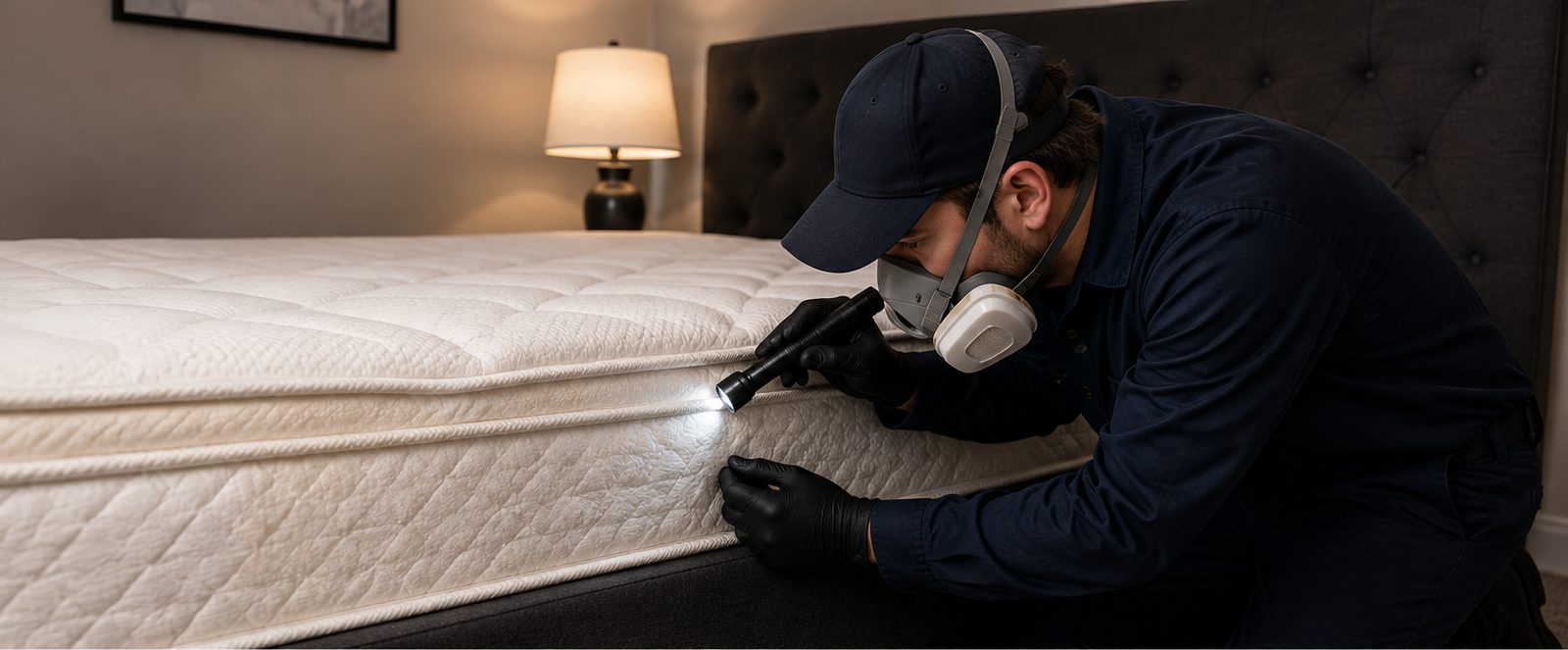
Half the calls we get turn out to be something else: carpet beetles, fleas, a skin reaction. Here is what actually points to bed bugs, and a bed bug dog inspection can settle it quickly across several rooms.
Look in the seams first. Bed bugs stay within a few feet of where people sleep, so mattress piping, the edge of the box spring and the joints of the frame are where evidence turns up long before anything appears in the open.
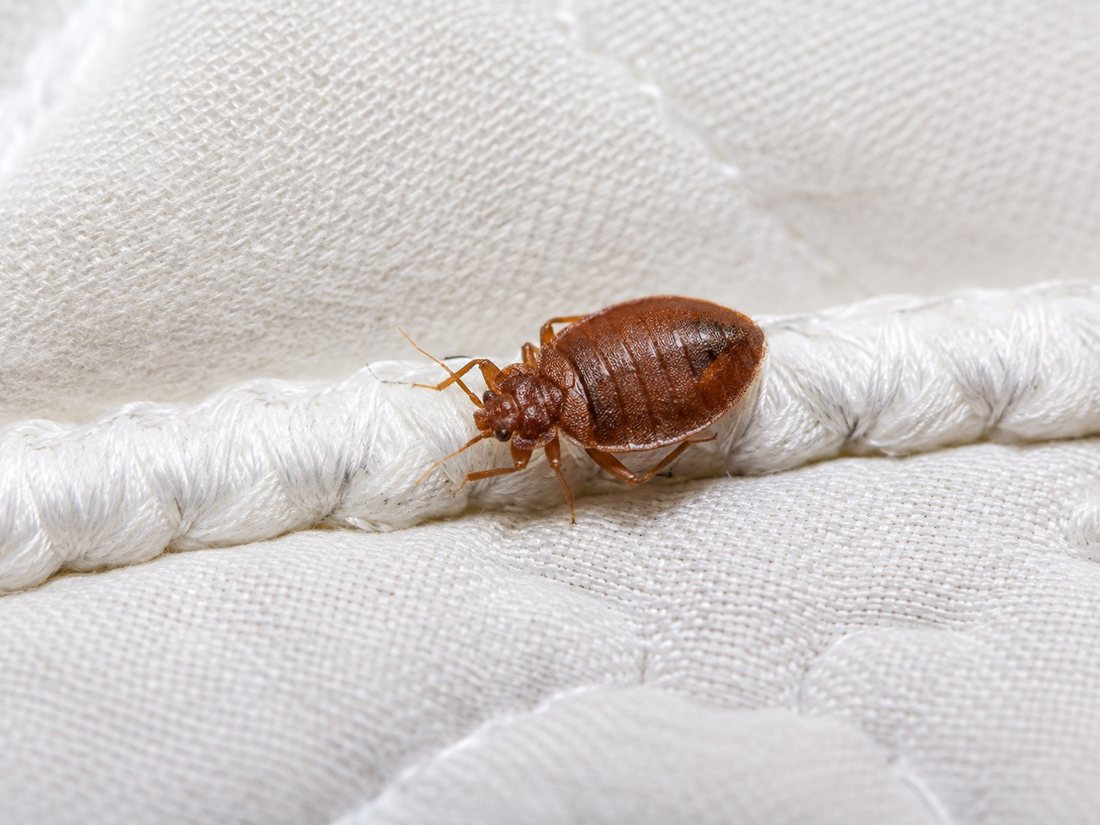
Small rust or dark brown spots on sheets, mattress seams or the box spring.
Bites in clusters or short lines, usually on skin left exposed while sleeping.
Pale, translucent shells left behind in seams and along the bed frame.
Flat, oval and reddish-brown, roughly the size of an apple seed.
A sweet, musty smell that becomes noticeable in a heavily infested room.
Symptoms that started after a hotel stay, a move, or secondhand furniture.
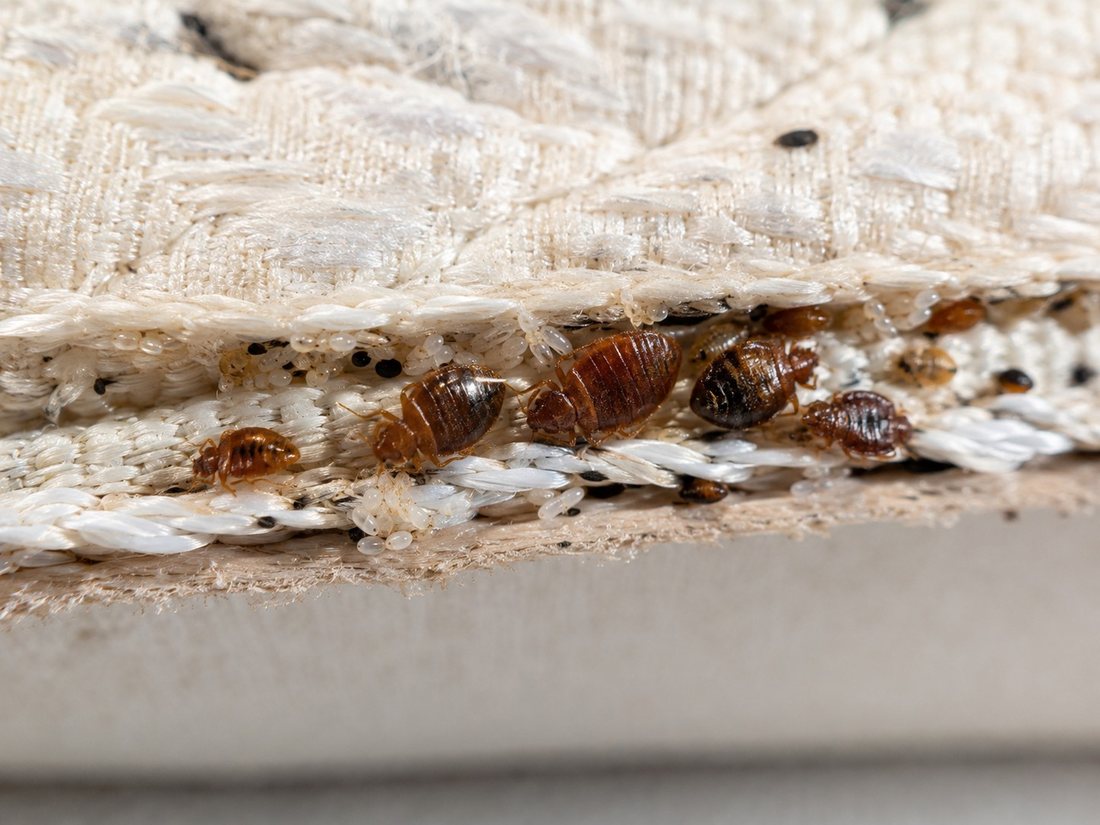
Bites alone are not proof. People react to bed bug bites very differently, and some not at all, so we look for physical evidence before we treat anything. If we inspect and it is not bed bugs, we tell you that and point you at what it probably is.
We take apart the obvious places (mattress seams, box spring, frame joints, headboard, nightstands), then work outward to baseboards, outlet plates, curtains and upholstered furniture. In apartments we check whether the source is actually your unit or a neighbor's, because treating the wrong unit repeatedly is the single most common way a bed bug job fails.
Live bugs, eggs and shed skins come out with HEPA extraction before any product goes down. This is the fastest way to cut the population and it removes eggs, which are the part of the life cycle most treatments handle poorly.
Cracks, voids, frame joints and furniture seams get treated directly. These are the places bugs cluster and where surface spraying never reaches. Product selection depends on the surface and the room.
Narrow spore bands go down along every travel route between harborage and host. This is the part that keeps working after we are gone, for up to three months. See how the Aprehend service works.
Bed bug-proof mattress and box spring encasements trap anything left inside and make future inspections trivial. Interceptors go under every bed and furniture leg so we have hard evidence of activity, not guesswork.
We come back, read the interceptors, re-inspect, and re-band anything disturbed. The job is finished when monitoring says it is finished, not when a fixed number of visits runs out.
Good prep makes the difference between one treatment and three. We send a specific list after the inspection, but this covers most homes.
We do not quote bed bug removal work over the phone, because anyone who does is guessing. After the inspection you get a written price. These are the things that drive it.
A single bedroom is a different job from a whole floor, and the inspection is what tells us which one you have.
Bugs in the living room as well as the bedroom means the population has been established for a while.
Multi-unit buildings need adjacent units checked, or the infestation comes straight back through the wall.
More harborage means more inspection time and more surfaces to band with Aprehend.
Sectionals, recliners and upholstered headboards all add treatment time.
Quarterly Aprehend costs considerably less than paying for another full remediation later.
If a company quotes you a flat price sight unseen, ask what happens when they arrive and find three rooms instead of one.
Discreet, unmarked arrival on request. Most single-bedroom jobs are handled in one visit plus follow-ups, with the Aprehend barrier carrying the room for three months.
We document what we find in writing, which matters if you need your landlord to act. In New York, treatment in a rental is generally the landlord's responsibility, and we can talk you through what to ask for.
Unit-by-unit inspection, adjacent-unit checks, and documented treatment records. Quarterly Aprehend programs available across a portfolio.
After-hours scheduling, fast room turnaround, and preventive barriers in high-turnover rooms so a guest introduction never becomes a review.
Servicing Manhattan, Brooklyn, the Bronx, Staten Island and Northern New Jersey.
A single bedroom usually runs two to three hours once inspection, extraction, harborage treatment and the Aprehend barrier are all done. A whole apartment is closer to half a day. We would rather take the extra hour than miss a harborage and have you calling us back in a month.
Most jobs need one or two. The number is driven by what the interceptors show, not by a package we sold you up front. Because the Aprehend barrier stays active between visits for up to three months, follow-ups are about confirming the treatment worked rather than repeating it from scratch.
Often yes, at least partially. Bed bugs feed wherever people stay still for long periods, so living room sofas and recliners are the second most common harborage after the bed. We treat what the inspection justifies and nothing more, and we will explain why any given room is on the list.
Occasionally, if you catch a handful of insects in the first week. Beyond that it rarely works, and the common DIY tools actively make professional treatment harder. Foggers and store-bought sprays are repellent, so they scatter an infestation into wall voids and adjacent rooms instead of killing it. Almost every difficult job we take on was treated by someone at home first.
We tell you, in writing, and we tell you what treating your unit alone is likely to achieve, which is usually a temporary result. In a rental you can take that documentation to the building manager. If we are engaged by the landlord or management company, we treat the affected units together, which is the only approach that actually holds in multi-family buildings.
Someone needs to let us in and walk us through where people have been sleeping, but you do not need to stay for the whole appointment. Your technician gives you the re-entry interval before starting, in line with the product label, so you know when everyone can be back in the treated rooms.
Eggs are the reason bed bug jobs are measured in weeks. They are glued into seams and cracks and resist most products, which is why we vacuum them out physically wherever we can reach them. For the ones we cannot, the answer is the residual barrier: eggs that hatch weeks later still have to cross treated ground to reach a host.
Applications are made to structure, frames, seams and baseboards rather than to visible upholstered faces, and everything is applied to label. If you have antiques, delicate finishes or unusual fabrics, point them out at the inspection and we will plan around them or use a different approach on those pieces.
Keep the interceptors under the bed legs after we finish, because they turn a reintroduction into something you spot in week one rather than month three. Check luggage after travel and inspect secondhand furniture before it comes through the door. For buildings that keep getting hit, a quarterly Aprehend program keeps a live barrier in place year round.
Send the details and we'll come back to you. If it's urgent, call instead, because the phone is always faster.
One inspection tells us how big this actually is. You get a written quote before we touch anything, and an Aprehend barrier that is still working three months from now.