Aprehend Is Non-Repellent by Design
Bed bugs can't detect the barrier and don't avoid it. A repellent product just pushes an infestation deeper into a wall; Aprehend lets them walk right through.
Home / Aprehend Bed Bug Treatment
Our primary bed bug service. Aprehend is a fungal biopesticide that turns the floor between a bed bug's hiding place and your bed into a trap it has to cross, and keeps that trap live for up to three months.
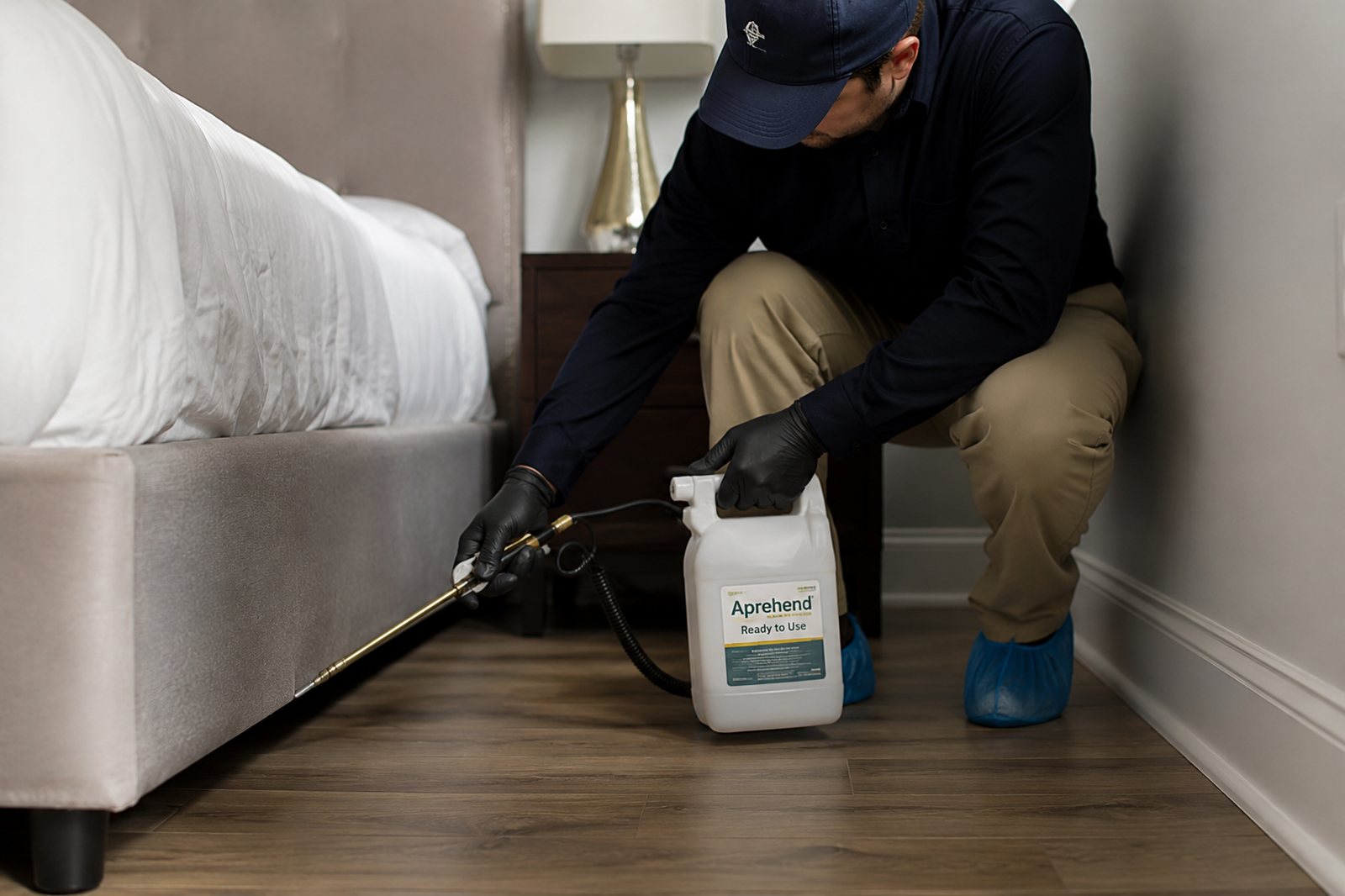
Aprehend is an EPA-registered biopesticide whose active ingredient is Beauveria bassiana, a fungus that occurs naturally in soil and has been infecting and killing insects for a very long time without any help from us.
The spores are suspended in an oil formulation and applied with a low-volume, low-pressure applicator in narrow bands. It is not diluted, not mixed with anything else, and not sprayed indiscriminately across a room. The whole method depends on placement: the product works because it sits exactly where bed bugs walk.
Almost every other bed bug product on the market kills by attacking the insect's nervous system. Aprehend kills by infecting it. That difference is why it still works on bed bug populations that shrug off pyrethroids, and it's why The Bedbug Experts built our service around it rather than treating it as an add-on.
The barrier does the walking for us. Bed bugs have to cross the treated ground to reach a host, and once they have, the fungus travels home with them.
Hunger moves a bed bug from its harborage toward a sleeping host. The route runs across treated ground it cannot detect and does not avoid.
Spores stick to the legs and underside. Within about a day they germinate and begin infecting the insect, which carries on feeding and moving as normal.
The infected bug returns to the harborage and passes spores to others by contact, reaching insects deep in cracks that no applicator could ever have touched.
Bed bugs can't detect the barrier and don't avoid it. A repellent product just pushes an infestation deeper into a wall; Aprehend lets them walk right through.
If it killed on contact, the spores would never reach the harborage. The four-to-ten-day window is what lets an infected bug carry the fungus home first.
An Aprehend treatment is only as good as the map behind it. These are the surfaces we band on a typical bedroom:
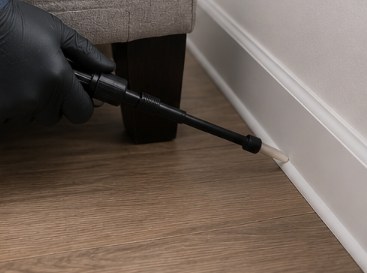
Where it does not go: sleeping surfaces, bedding, countertops, or anywhere the label prohibits. Aprehend is applied to structure and furniture, not to the places you put your skin.
| Aprehend® treatment | Conventional contact spray | |
|---|---|---|
| How it kills | Fungal infection after the spores germinate on the insect | Neurotoxic action on contact |
| Residual life | Up to three months on treated surfaces | Effectively over once the product dries |
| Resistant bed bugs | Still effective. Resistance isn't a defense against infection | Widespread pyrethroid resistance limits results |
| Reaches hidden bugs | Yes. Infected bugs carry spores back and spread them | Only what the technician can physically reach |
| Speed | Four to ten days after exposure, by design | Fast on the bugs it lands on, nothing after |
| Coverage | Narrow low-pressure bands on travel routes | Broad surface spraying |
| Preventive use | Quarterly barriers catch new introductions | Not practical as a standing barrier |
Both approaches have a place. Heavy infestations still benefit from vacuum extraction, direct treatment of harborages and encasements, which is what our bed bug removal service adds on top of the Aprehend barrier.
Most rooms take 30 to 60 minutes. You'll get the re-entry interval and any prep instructions before we start, and monitors go down before we leave.
This is normal and expected. Bed bugs that crossed the barrier are already infected but are still moving. Seeing one on day three is not a sign the treatment failed.
Bites usually stop first, then sightings. Spores are still moving through the harborage during this stretch, reaching insects that never crossed the band themselves.
Eggs laid before treatment hatch during this window. The barrier is still live when they do, which is the entire point of using Aprehend instead of something that dried out in an afternoon.
Do not spray anything yourself over a treated surface. Store-bought products can interfere with the barrier and, more importantly, scatter the infestation into rooms we haven't banded.
For properties where bed bugs keep arriving through the front door, the smartest use of Aprehend isn't treatment at all. It's a standing barrier.
Hotels, short-stay rentals, senior living, student housing, shelters and large multi-family buildings run scheduled Aprehend applications so that a bed bug carried in by a guest or resident crosses a live barrier within hours of arriving, and dies before it can establish. You stop paying for emergency remediation and start paying a predictable line item instead.
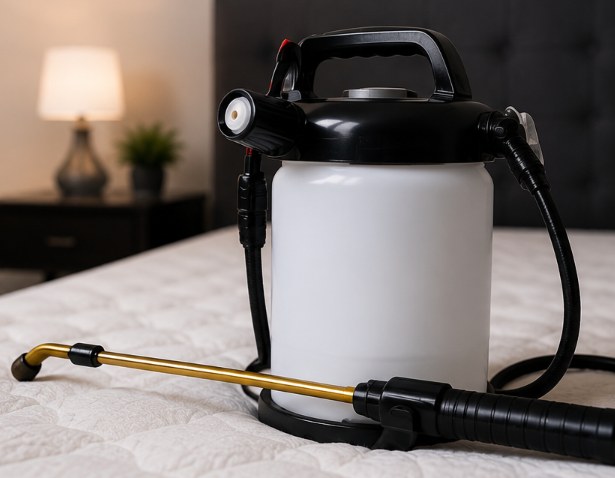
Rooms are banded on a rotation timed to the three-month residual so coverage never lapses.
Written records of every room, date and application, useful for management, insurers and disputes.
Unmarked vehicles and discreet scheduling. No fogging, no evacuated floors, no guests asking questions.
An EPA-registered biopesticide for bed bug control. The active ingredient is Beauveria bassiana, a naturally occurring fungus that infects insects. The spores are suspended in an oil formulation and applied by a trained technician as narrow barrier bands along the routes bed bugs travel between hiding places and people.
Up to three months from a single application. That residual is the whole reason we lead with it. A conventional spray has essentially stopped working by the time it dries, which is why those jobs so often need repeat visits.
Bed bugs that cross a treated barrier typically die within four to ten days. It is deliberately not a knockdown product: that delay is what allows an infected bug to carry spores back into the harborage and pass them to bed bugs we could never have reached directly.
Usually, yes, and that's one of the most common reasons people call us. Resistance to pyrethroids is widespread in bed bug populations. Because Aprehend kills through fungal infection rather than a neurotoxic pathway, resistance to conventional insecticides doesn't protect the insect.
Aprehend is applied in narrow low-pressure bands to structure and furniture, not fogged into the air and not applied to sleeping surfaces. Every application follows the product label, and your technician will give you the specific re-entry interval and any room instructions before starting. If anyone in the home is pregnant, immunocompromised, or has a respiratory condition, tell us in advance so we can plan around it.
Normal living is fine. What you should not do is scrub, mop or spray over the treated bands, or vacuum them. That removes the barrier and you lose the residual you paid for. We'll show you exactly where the lines are before we go.
Almost never, and we'll tell you plainly if we think otherwise. Dragging an infested mattress through a hallway is a good way to seed the rest of the building. Encasements are usually the better answer, and they cost a fraction of replacement.
It depends on how many rooms are involved, how far the infestation has spread, and whether neighboring units need treating too. We quote after the inspection, in writing, before any work starts. No pricing over the phone from a guess. Call (838) 7 Bed-Bug and we'll book the inspection.
Yes, and it's a strong pairing. Heat kills what's in the room on the day but leaves nothing behind, so anything that escaped into a wall void walks back in a week later. An Aprehend barrier applied after heat catches those survivors. See our bed bug heat treatment page for how the two are combined.
Send the details and we'll come back to you. If it's urgent, call instead, because the phone is always faster.
Tell us the property type and what you've been finding. We'll inspect, map the routes, and quote the Aprehend service before anything gets applied.